
How to Choose a Gold Necklace or Pendant as a Gift: A Buyer's Guide

Choosing a gold necklace or pendant for someone else is harder than it looks. You rarely know their preferred length, how much weight they like, or whether they wear gold at all. This gold pendant gift guide for Singapore buyers explains how the parts fit together, how to learn what the recipient likes without spoiling the surprise, which designs suit uncertain situations, and what to check before paying.
Why Necklaces and Pendants Are So Often the Default Gold Gift
What Makes Them a Low-Risk Choice, and Where the Risk Remains
Unlike rings and bracelets, necklaces and pendants don't depend on a finger or wrist measurement, so a wrong guess doesn't make the piece unwearable. Four risks remain: length, weight, style, and whether the recipient wears gold at all. A pendant that sits too high, feels heavy, or clashes with their taste ends up in a drawer just as easily.
A Gift That Gets Worn vs. One That Gets Stored
This guide tests whether the piece fits the recipient's daily life: their routine, existing jewellery, and beliefs. The sections below apply that test to construction, design, budget and exchange terms.
Necklace, Chain, or Pendant: Understanding What You Are Actually Buying
Pendants, Chains, and Complete Necklaces

Retailers use these terms differently, so read each listing closely.
|
Term |
What it is |
What to confirm in the listing |
|
Pendant |
The charm or motif that hangs |
Whether a chain is included; the size of the bail (the loop) |
|
Chain |
The strand worn around the neck |
Length, thickness, clasp type and purity |
|
Complete necklace |
A chain and pendant sold as one piece |
Whether the chain can be replaced or lengthened |
Viewing gold pendants and gold chains side by side helps when you buy them separately.
Will This Pendant Work on This Chain?
The bail is the small loop the chain passes through. If it is narrower than the chain, the pendant will not thread. If the chain is much finer than the pendant's weight suggests, the pairing looks unbalanced, and the chain can strain. Visual balance matters too: a delicate pendant on a thick chain looks lost, while a large pendant on a fine chain pulls forward. Test the fit before buying instead of assuming any two pieces will pair.
Solid vs. Hollow Construction
Solid pieces are heavier, more durable, and cost more for the same size. Hollow pieces look larger for less gold and weigh less, but can dent more easily. Because price follows weight, construction explains much of the gap between two pendants that look alike.
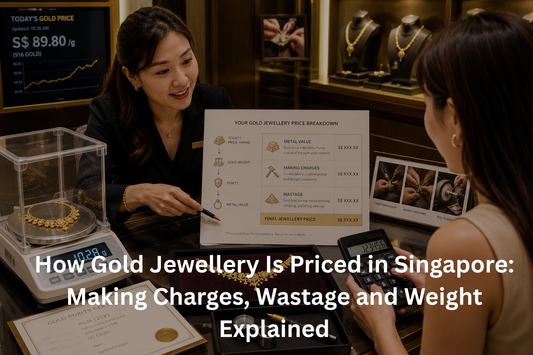
Our pricing explainer shows how weight, rate and making charges combine.
Start With the Recipient, Not the Catalogue
Reading Their Existing Jewellery
Note what they already wear and rarely remove: yellow, rose or white tones, fine or chunky chains, minimal or statement pieces. Someone who wears a thin chain daily is unlikely to switch to a heavy one.
Finding Out Length and Fit Without Spoiling the Surprise
Photos of them wearing a necklace show where it sits on the neckline. If you can borrow one briefly, lay it flat and measure it. A mutual friend or family member may also know their preference.
Daily Wear vs. Occasional Wear
A recipient who works with their hands, exercises often or travels a lot suits a sturdier, simpler piece. Someone who dresses up occasionally can enjoy something more delicate. 916 gold is the usual choice for daily wear because 999 is softer; our purity comparison explains the trade-offs.
Choosing for Different Recipients
Preferences vary more than age or gender suggests, so rely on what you observe. For parents and elders, check that the clasp is easy to fasten and the weight is comfortable. Partners respond to pieces that reflect their personal style. Versatile designs suit friends well. For teenagers, a simple, durable design leaves room for changing tastes. For men, look at whether they already wear chains and how thick.
For infants, see our baby gift guide and newborn safety guide instead.
Choosing the Design: Meaning, Motif, and Sensitivity
Classic and Versatile Designs
Simple shapes such as plain discs, small hearts and understated geometric forms age well and suit most wardrobes. They are the safest pick when you are unsure. For more on styles, see our guide to choosing a gold pendant for women.
Symbolic and Religious Motifs
Match any religious or cultural motif to the recipient's own beliefs and community. Meanings differ between traditions, and some communities treat certain images as objects of reverence rather than adornment. If you cannot confirm that a symbol is welcome, choose a neutral design.
Initials, Zodiac, and Personalised Pieces
Personalisation adds meaning when you know the recipient well, but it narrows the options: a pendant with initials is harder to exchange or resell. Ask the retailer whether they offer customisation, how long it takes, and whether personalised items can be exchanged.
Matching the Gift to the Occasion Without Repeating the Occasion Guides

Birthdays, Anniversaries, Graduations, and Milestones
Occasion shifts tone more than category. Birthdays suit lighter, personal designs. Anniversaries lean sentimental. Graduations and milestones favour pieces meant to last and commemorate. More formal occasions suit refined, simpler designs.
When a Dedicated Guide Is the Better Starting Point
Occasion-specific etiquette and budgets sit in separate guides: our wedding gift guide, Chinese New Year gold gift guide and baby gift guide. Start there if your occasion matches.
Budgeting for a Gold Necklace or Pendant Gift
What Moves the Price of a Necklace or Pendant
Weight is the main driver. Chain thickness and length, solid or hollow construction, and design complexity each add to it, and intricate designs usually carry higher making charges. The pricing explainer above and our guide to what drives the gold price cover the mechanics.
Getting More Impact From a Modest Budget
A lighter chain, a simpler pendant or hollow construction keeps the price down. Each has a trade-off: a lighter chain feels more delicate and needs gentler wear, a simple pendant is less distinctive, and hollow pieces dent more easily. Choose the compromise the recipient will mind least.
Before You Buy: Quality, Purity, and Policies
Checking Purity and Hallmarking
Look for the purity stamp, such as 916 or 750, and ask the seller to confirm purity, weight and whether the piece is solid or hollow. Hallmarking is voluntary in Singapore and is run by the Singapore Assay Office, so it is not a legal requirement, but an assayed piece provides independent assurance.
Our 916 hallmark guide explains how to read the stamp.
Inspecting Clasps, Bails, and Finish
Open and close the clasp several times; it should fasten firmly without force. Check that the bail is intact rather than thin or misshapen, that solder joints are smooth, and that the finish is even with no rough edges. These are the points where weaker pieces tend to fail.
Confirming Exchange and Return Terms
You are buying for someone else's taste, so exchange terms matter. Retailers set their own, and G&M Collections publishes its refund and exchange conditions on a policy page, which you should read before paying. Ask about:
-
the exchange window and the date it starts from
-
the condition and packaging required
-
whether the receipt is needed
-
whether you get another item, credit or a refund
-
how price differences are handled
-
whether personalised or adjusted pieces are excluded
Singapore's Lemon Law, explained by CASE, covers defective goods. A pendant that simply does not suit the recipient is a matter for the retailer's exchange policy, not a defect.
Presenting the Gift

Packaging and Documentation
Keep the receipt and exchange details together but out of sight, for example, in a card under the box lid, or pass them to a close relative. Avoid leaving a price tag visible.
Helping the Recipient Care for It
A short note pointing to our cleaning guide and storage guide helps the piece stay in good condition.
Common Mistakes When Buying a Necklace or Pendant Gift
Choosing Against the Recipient's Taste
Buying what you like, or what is trending, instead of what they already wear is the most common error.
Overlooking the Chain
A pendant with no chain, or one on a chain that does not suit it, cannot be worn on day one.
Assuming a Symbol Is Universally Welcome
A motif that blesses one person can be unwelcome to another. The motif section above explains how to check.
Leaving No Room to Exchange
Skipping the policy check removes your safety net, especially if you can't confirm the recipient's preferred length.
Frequently Asked Questions
Is a Necklace or a Pendant the Better Gift?
Neither wins outright. A complete necklace suits a recipient who wants something ready to wear. A pendant alone suits someone who already owns chains they like, as long as the bail fits. When you are unsure about their chains, the complete necklace is safer.
What Chain Length Is Safest When I Do Not Know the Recipient's Preference?
No single length suits everyone, because it depends on neckline, build and habits. When designs allow, choose an adjustable or extendable chain so the recipient can set the length. Otherwise, follow what you observed on their existing necklaces.
Can I Exchange a Gold Pendant if It Does Not Suit the Recipient?
That depends on the retailer. Before buying, ask about the exchange window, required condition, and whether you'll receive another item or credit.
Conclusion
Buy for the recipient's routine and taste, not your own. Treat the pendant and chain as one decision, because the bail, weight and length must work together. Make sure any symbol suits their beliefs, and confirm the exchange terms before paying.
Tags:
Related articles
-
Sep 21 2026