
How to Resell or Trade In Gold Jewellery in Singapore: What Affects the Price You Get

Anyone who sells gold jewellery in Singapore usually gets the same surprise: the quote is lower than the receipt. That gap is normal and comes from how gold is priced. This guide explains how buyers value jewellery, how cash buyback, trade-in, and pawning differ, which factors you can influence, and how to prepare to compare offers on equal terms.
Why the Price You're Offered Is Often Lower Than You Expect
Retail Price vs. Buyback Value
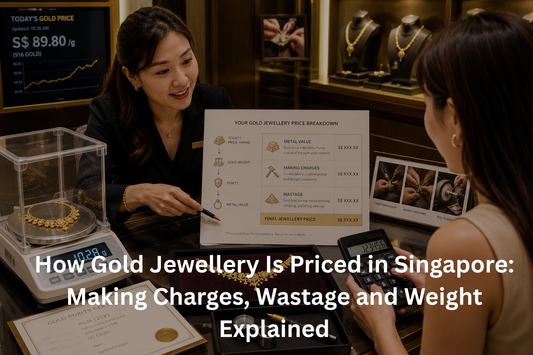
When you buy jewellery, the price covers the gold at the day's rate, the maker's charges for design and labour, and GST. When you sell, a buyer is generally paying for the metal alone. The making charges and GST belong to the finished piece, not the gold inside it, and the buyer also needs a margin. Our comparison of gold jewellery and gold bars looks at resale from an investor's angle; this guide covers the exit itself.
Who This Guide Is For
It suits people with unworn inherited pieces, those upgrading to something new, sellers raising funds, and investors rebalancing a holding. It explains how pricing works and how to sell well. It does not advise whether you should sell.
How Gold Jewellery Is Valued When You Sell It

Spot Price, Purity, and Weight
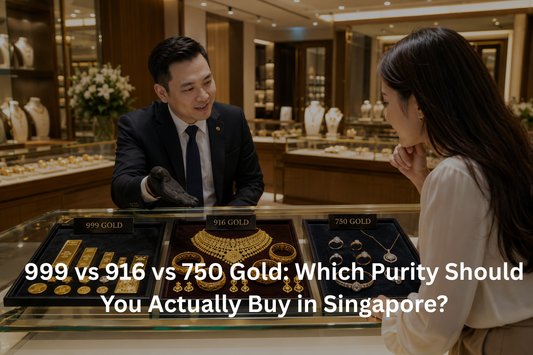
A quote starts with the reference gold price, converted into Singapore dollars per gram. The buyer then adjusts for purity and net weight. Purity is expressed as fineness or karats: 999 is 24K (almost pure), 916 is 22K, and 750 is 18K. A gram of 916 jewellery contains less gold than a gram of 999, so it is valued lower. Rates move through the day, so none are quoted here.
Our purity guide explains the grades in more depth.
Why Making Charges Are Usually Not Recovered
Making charges pay for design and craftsmanship. When a buyer values jewellery as metal, which is the usual basis, that workmanship earns nothing extra because the piece is likely to be refined. The exception is a piece with collectable, branded or resale-as-jewellery value, which a buyer may assess differently.
Deductions and Buyer Spreads
The gap between the reference price and your quote covers the buyer's margin plus refining and handling costs. Stones, clasps, solder and other non-gold parts also reduce the weight counted as gold. Buyers set these deductions differently, and no standard percentage applies, which is why quotes vary.
Does Design Condition Matter?
For most pieces, no. Dented, broken or unfashionable jewellery is generally valued on metal content, so a damaged bangle and a pristine one of equal weight and purity can attract similar quotes. The logic changes for resale-grade or collectable pieces, where design, brand and condition can carry value beyond the gold.
Cash Buyback, Trade-In, or Pawn? Understanding Your Options
These three routes serve different goals, as the table below shows side by side.

|
Factor |
Cash buyback |
Trade-in |
Pawn |
|
What happens |
Outright sale |
Value credited toward new jewellery |
Secured loan against the piece |
|
Do you keep the piece? |
No |
No |
Yes, if you redeem it |
|
Best suited to |
Liquidity with no new purchase |
Upgrading |
Short-term cash while keeping the piece |
|
Main trade-off |
The sale is final |
Tied to a purchase |
Interest accrues; unredeemed items can be forfeited |
Cash Buyback
An outright sale gives you money and ends your ownership, which suits a seller who wants liquidity without making another purchase. The quote rests on metal value, so comparing several buyers matters most here.
Our jewellery and bullion comparison explains why resale value differs between formats.
Trade-In or Exchange Toward New Jewellery
In a trade-in, your old piece's value is credited toward a new one. Retailers structure this differently, and the credited value can differ from their cash rate. You also commit to a purchase, which reduces flexibility. On tax, IRAS gives GST-registered jewellers an administrative concession for gold jewellery trade-ins, letting them charge GST on the difference between the new piece and the trade-in value when the customer is not GST-registered. Compare any trade-in credit with a cash quote.
Pawning vs. Selling
Pawning is a secured loan, not a sale. You hand over the piece, receive a loan and a pawn ticket, and redeem it by repaying the loan plus interest. Under the Pawnbrokers Act 2015, interest is capped at 1.5% per month, and you have six months to redeem, as the Registry of Pawnbrokers explains. During that period, the pawnbroker may not dispose of the pledge. Items left unredeemed can be forfeited after notice. The deciding question is whether you want the piece back.
Where to Sell: Comparing Types of Buyers in Singapore
Jewellery Retailers and Goldsmiths
Retailers and goldsmiths can test and weigh your piece in person, and many offer trade-in options. Terms differ, and some may favour trade-in over cash, so confirm whether they offer a cash option.
Bullion Dealers and Refiners
These buyers price on metal content, which suits pure-gold items, broken pieces and scrap. They have little reason to pay for design, so intricate or collectable pieces gain nothing there.
Pawnbrokers
Pawnbrokers are licensed lenders, and some also buy outright. The pawn-or-sell distinction changes what you receive: a pawn loan is not a sale price, and you remain responsible for redeeming the piece. Make sure you know which transaction is being quoted.
Second-Hand and Consignment Channels
A piece with design, brand or collector value may fetch more than melt value through second-hand or consignment channels. The trade-offs are time, fees and uncertainty over whether and when it sells. Plain pieces rarely benefit.
What Affects the Price You Get

Factors You Cannot Control
Gold prices move with global markets, the buyer sets the spread, and a quote reflects the rate at the moment it is given. A quote that looked good in the morning may not hold by the afternoon.
Factors You Can Influence
You can verify purity before you go, make sure pieces are weighed accurately, separate items by purity, and compare quotes like for like: same weight basis, same deductions, same fees.
Selling Timing: What Is and Isn't Predictable
Quote timing and market timing are different things. You can compare same-day quotes and find out how long a quote is held. No one can reliably predict where the gold price will go next.
Our guide to whether now is a good time to sell covers market timing in more depth.
Preparing to Sell: A Practical Checklist
Identify Purity and Weight Before You Go
Look for purity marks such as 916 or 750 on clasps and inner surfaces, and weigh pieces on a home scale for a rough idea. These give you a baseline, but the buyer's own testing is the deciding factor.
Gather Documentation
Bring original receipts and any purity or hallmark documentation, such as paperwork from a retailer like G&M Collections. These support valuation, particularly for branded or certified pieces. When a regulated dealer conducts customer due diligence, it must verify your identity, typically with an ID card or passport, and the law prohibits it from completing the sale if it cannot.
Get Multiple Written Quotes
Ask each buyer for the rate per gram, the deductions, any fees, and whether the figure is for cash or trade-in. A written breakdown lets you compare offers on a level playing field.
Understand Fees and Terms Before Agreeing
Find out whether testing or evaluation fees apply and when they are waived, how you will be paid, and how long the quote is held. These terms differ between buyers, so rely on each buyer's current published terms.
Protecting Yourself During the Sale
Watching the Testing and Weighing
Stay present while your piece is tested and weighed. Ask the buyer to explain the purity reading and the weight recorded.
Red Flags in a Quote
Be cautious about vague deductions, pressure to decide immediately, a refusal to provide a written breakdown, or a rate well out of line with other quotes.
Verifying That the Buyer Is Licensed
Businesses that buy and sell precious metals are regulated dealers and must register with the Registrar of Regulated Dealers; the Ministry of Law publishes a list of registered dealers. Pawnbrokers are licensed separately under the Pawnbrokers Act. Anti-money laundering rules also apply: a second-hand goods dealer paying more than S$20,000 in cash or cash equivalent for precious metals must file a cash transaction report, so large sales can involve extra paperwork.
Common Mistakes Sellers Make
Expecting to Recover the Original Purchase Price
This gap causes most disappointment. The retail price included making charges and GST that do not come back, as explained earlier.
Accepting the First Quote Without Comparison
Quotes can differ even between buyers using the same reference price, because spreads, deductions and fees differ.
Cleaning or Altering Pieces Before Valuation
A light wipe does no harm, but polishing, repairing or re-plating rarely raises metal value and can damage collectable or antique pieces.
Selling Mixed-Purity Pieces Together
Bundling pieces of different purity can obscure the value of the higher-purity items. Separate them so each is tested and priced on its own.
Frequently Asked Questions
Can I Sell Gold Jewellery Bought From Another Retailer?
Often, yes. Many buyers assess the metal rather than where it was bought, subject to testing. A retailer's trade-in terms may differ for pieces bought elsewhere, so ask before you go.
Is Gold Jewellery With Gemstones Valued Differently?
Buyers generally deduct the weight of stones and other non-gold parts from the gold weight. Some may value valuable stones separately while others do not, so ask how your buyer treats them.
Do I Need to Declare or Pay Tax When Selling Gold Jewellery?
That depends on your circumstances. IRAS's gold jewellery guidance is written for GST-registered jewellers and covers how GST applies to trade-ins. If you sell personal pieces, check IRAS's current position for your case, particularly if you sell regularly or in volume.
How Quickly Do I Get Paid?
Many buyers settle on the day by cash or bank transfer, but payment method and timing vary. Settle both before agreeing.
Conclusion
Resale value reflects the gold in a piece, not the retail price paid for it. Your result depends on the route you choose, how well you prepare and how carefully you compare offers. Knowing your pieces' purity and weight, keeping your documents to hand, collecting written quotes on the same basis and dealing with a licensed buyer put you in a position to sell on informed terms.
Tags:
Previous
How to Store Gold Jewellery at Home Safely in Singapore
Next
How to Choose a Gold Necklace or Pendant as a Gift: A Buyer's Guide
Related articles


-
Sep 21 2026